

Ceiling radiant heating and cooling vs. BKT
Effective solutions for modern and energy-efficient buildings
Current buildings are characterized by low heat loss20–40 W/m²and conversely, increasing thermal load50–80 W/m²) due to solar gains and internal heat sources. This places a critical emphasis on effective cooling and dynamic performance control.
In practice, two types of hydronic radiant systems are most commonly used:
- BKT (concrete core tempering)
- Ceiling radiant systems DELGADO (SDK/plaster)
The differences between them have a fundamental impact on comfort, efficiency, and operational flexibility.
BKT: robust but slow system
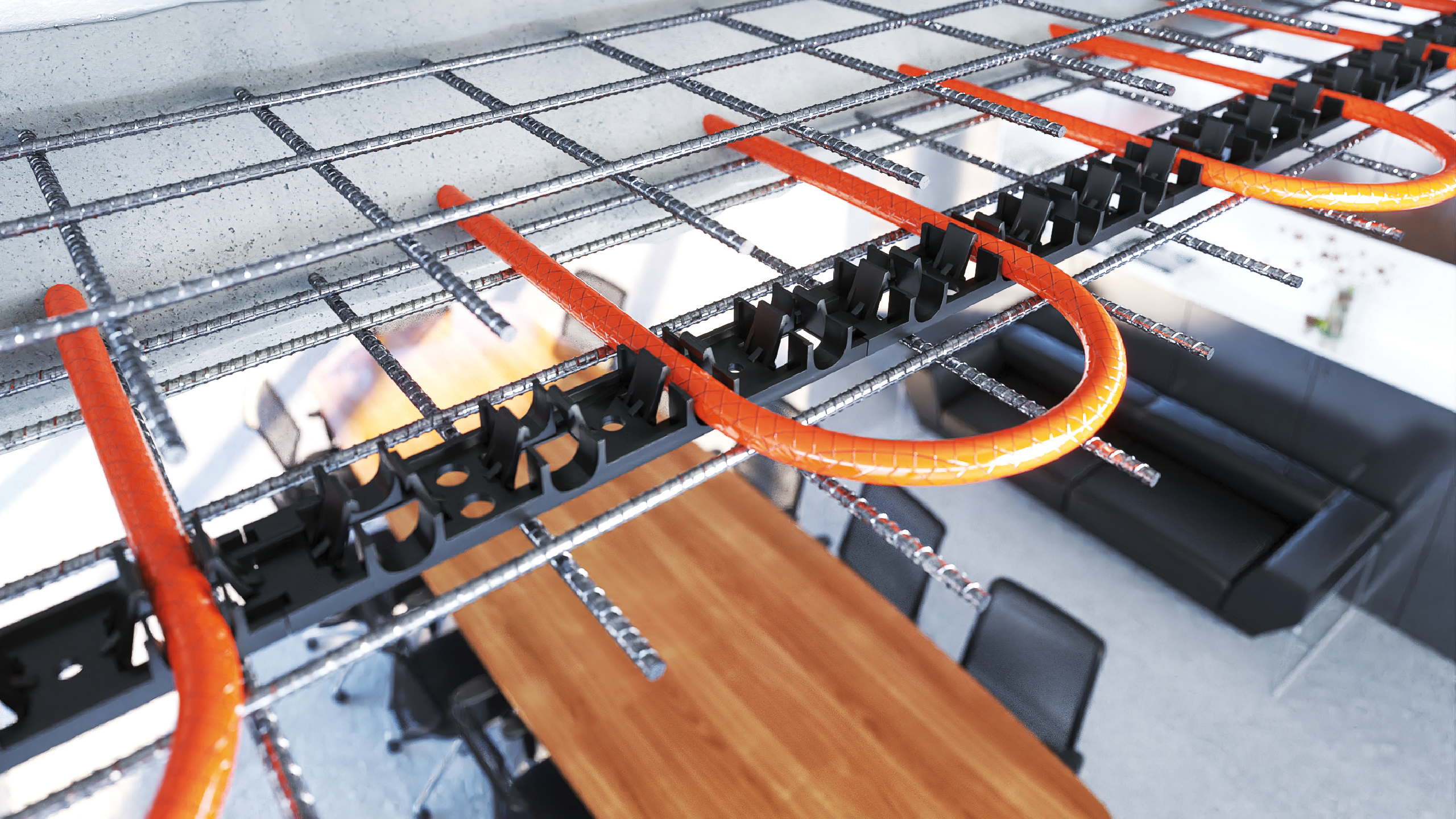
BKT utilizes energy accumulation in reinforced concrete structures:
- Pipes 16x2 to 20x2 mm, spacing approx 100 mm,
- integration directly into the ceiling slab.
Benefits
- stable operation during heating,
- the ability to cover the heat loss of an object,
- Suitable for objects with constant load.
Limits in practice
- slow reaction to changes (hours),
- complex regulation and zoning,
- limited flexibility in project changes,
- in cooling mode, the need to keep the temperature above the dew point (≥ 18 °C),
- cooling capacity only approx 44 W/m².
Result: a system more suitable for stable operation, less for dynamic buildings.
DELGADO Ceiling Radiant Systems: Dynamics, Performance, Control
Ceiling systems work with installation close to the surface:
- Pipes 8x1 mm, pitch 40-50 mm,
- minimum cover layer (SDK or plaster),
- System mats DELGADO SDK or Delgado Plaster.
Key benefits for design and operation
- Quick response (minutes) precise control,
- high flexibility in layout design and changes,
- simple and fast assembly (1 stage),
- suitable for zone control and modern BMS systems.
Cooling Mode Performance
- operation near dew point,
- inlet water temperature approx 61 °F,
- cooling capacity up to 75 W/m².
Result: full cooling without the need for additional systems.
Direct comparison from the investor's and designer's perspective
| Criterion | BKT | DELGADO Ceiling Systems |
|---|---|---|
| Reaction time | slow | Very fast |
| Regulation | limited | precise, zonal |
| Flexibility | low | High |
| Cooling capacity | ~44 W/m² | up to 75 W/m² |
| Suitability for cooling | limited | full-fledged |
What does that mean in practice?
BKT
- suitable for administrative objects with stable operation,
- lower management requirements, but limited flexibility.
Ceiling radiant systems
- ideal for modern offices, apartment buildings, and residential projects,
- handle dynamic loads (glare, occupancy),
- enable the optimization of operating costs and comfort.
Design recommendations
For projects with an emphasis on:
- Cooling and summer comfort,
- quick regulation,
- energy efficiency,
Are ceiling radiant systems unequivocally a better choice.
When designing, the system can be:
- dimension only for heat loss (lower investment),
- or activate the maximum area for Full heating and cooling without compromise.
UNIVENT Solution
UNIVENTA offers DELGADO ceiling heating and cooling system solutions that combine:
- High performance and efficiency,
- quick system response,
- compatibility with modern power suppliesAC, radiators),
- optimization of investment and operating costs.
👉 We will propose a solution tailored precisely to the type of object and operational requirements..




